Why does French press coffee taste heavier than pour-over? Soaking versus flowing, with a brew planner
French press and pour-over can use the same beans and taste like two different drinks. The difference is how the water meets the coffee, soaking versus flowing, and what the filter lets through.
Try the planner: pick a method and a size to get grams, water, time and grind, plus a body-versus-clarity view.
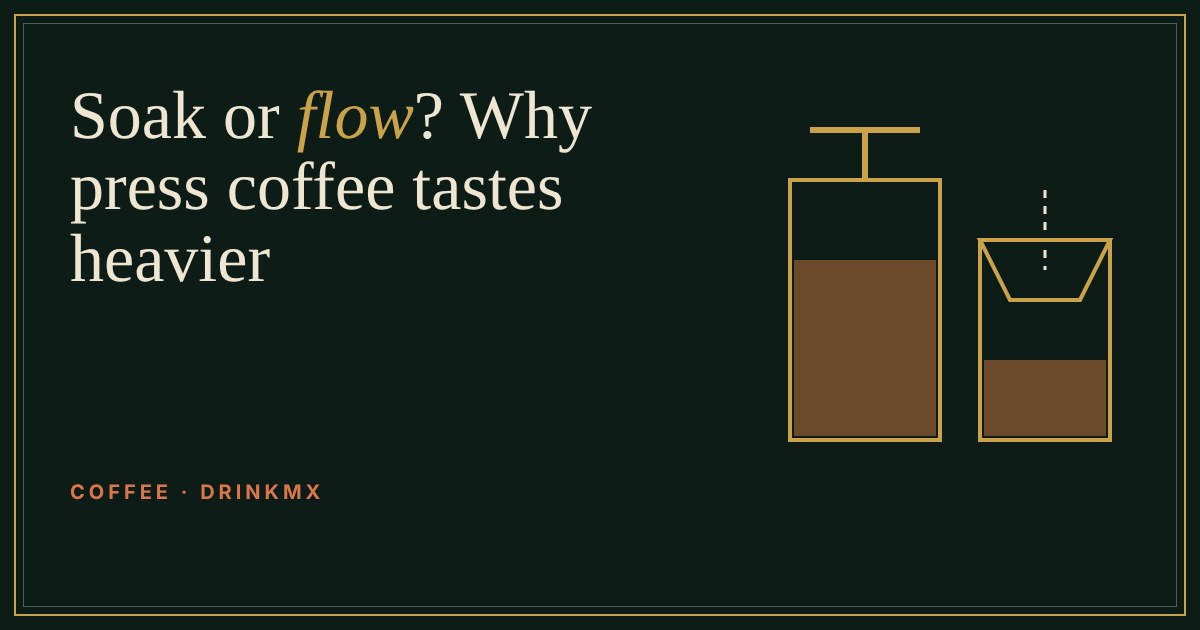
Brew the same beans in a French press and in a paper-filter pour-over and you get two different drinks. The press is heavy, round and a little cloudy. The pour-over is lighter, cleaner and brighter. The beans did not change. Two things did: how the water meets the coffee, and what the filter lets through.
Soaking versus flowing
A French press is an immersion brew. All the water sits with all the coffee for the whole time, so the coffee gradually dissolves into the same pot of water. A pour-over is a percolation brew. Fresh water keeps running through the bed of grounds and out the bottom, so it never has time to get crowded with dissolved coffee.
Immersion is forgiving: a minute too long changes the taste less than you might fear, because the water slowly fills up. Percolation is more sensitive to grind and pouring speed, because every drip of water takes its flavour on the way through and leaves.
What the filter keeps out
A press has a metal mesh. It holds back the grounds but lets through fine particles and coffee oils, which is where the weight on your tongue comes from. A paper filter catches most of the oils and fines, so the cup is clearer and the flavours read as separate notes. Neither is "right"; it is a choice between body and clarity.
One side note on health: oils such as cafestol, which are mostly caught by paper, have been linked to a rise in LDL cholesterol in people who drink a lot of unfiltered coffee every day. If you drink several cups of pressed coffee daily and watch your cholesterol, it is worth knowing, and worth asking a doctor about rather than guessing.
Why the grind flips
Because the press soaks the coffee for minutes, it needs a coarse grind: small particles would over-extract and turn bitter. Because pour-over water passes through in a few minutes, it needs a medium grind that slows the water just enough to dissolve the good parts. If your press tastes muddy and bitter, go coarser. If your pour-over tastes sour and thin, go finer or pour more slowly.
Which one should you make?
Choose the press when you want a full, round cup, for milk or for a slow morning, and when you do not mind a little sediment at the bottom. Choose pour-over when you have a lighter-roasted bean with fruity notes you want to taste clearly. Both want fresh water just off the boil, around 90 to 96°C, and both start from weighed coffee rather than scoops. Speciality coffee guidelines point to roughly 1:18 coffee to water as a reference, and plenty of people brew stronger than that.
Caffeine is similar in both, so the usual sensible limits apply. Many adults stay under about 400 mg a day, roughly four standard cups, and less in pregnancy, so count your cups and leave a gap before bed.
What to look for
If you buy a press or a pour-over set, a few things matter at any budget. Look for a mesh that fits tightly, because loose edges let grounds through. Choose a glass or steel body that holds heat, ideally with a size that matches how many cups you really pour. Check the plunger and the dripper are easy to clean, since old oils turn rancid and spoil the next cup. A grinder that can go coarse is worth more than any fancy jug.