Light, medium or dark roast? What roasting does to a coffee bean, with a roast slider
Roast level is the word on the bag that says most about the cup, and it is easy to misread. Dark does not mean strong, and light does not mean weak: roast is simply how far the heat has taken the bean.
Drag a slider from light to dark and watch acidity, sweetness, bitterness and body trade places, then see which brew method suits each roast.
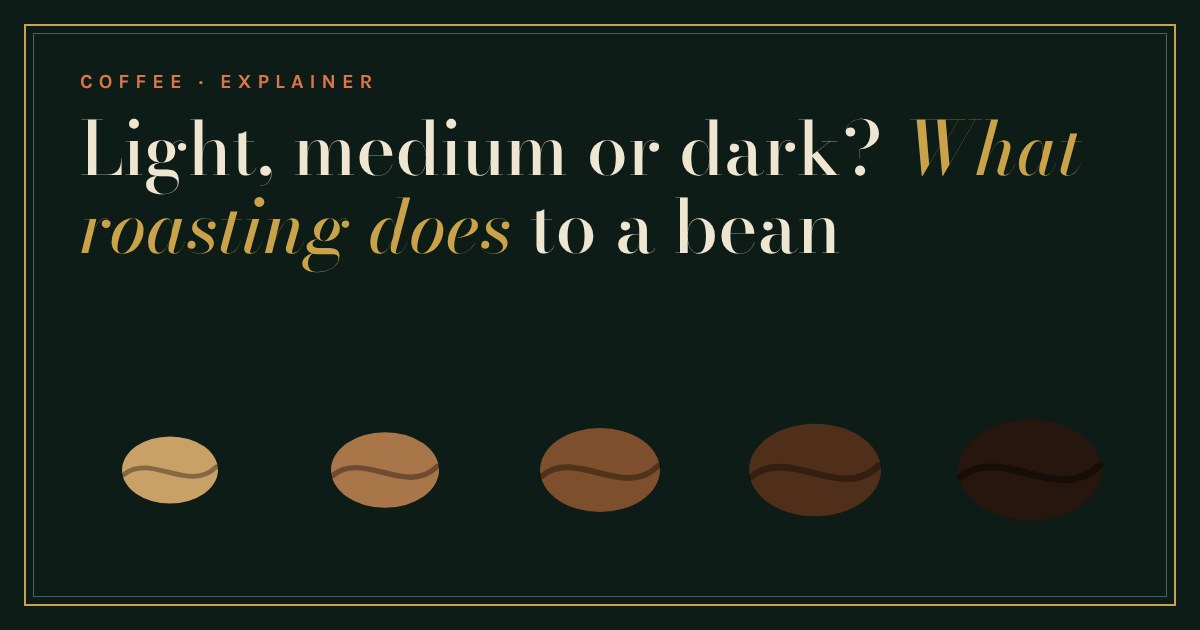
Roast level is the one word on a coffee bag that tells you most about what is in the cup, and it is also the most misunderstood. Dark does not mean strong, and light does not mean weak. Roast is simply how far the heat has taken the bean, and every step along the way trades one flavour for another.
What the roaster is doing
A green coffee bean is dense, pale and smells of hay. Heat drives out most of its water (roughly 10–12% at the start, 2–3% by the end), then the sugars and amino acids in the bean react and brown, in much the same way as toast or seared meat. That browning makes hundreds of new aroma compounds, and it is why green coffee is not worth drinking.
Two sounds mark the road. At roughly 195–205°C the beans make a loud crackle called first crack: steam pressure splits the bean and it puffs up. Acidity is at its highest around here. Keep going and, at roughly 224–230°C, comes a quieter, faster second crack, when the bean's cell structure breaks down and oils can start to creep to the surface. The exact figures vary by roaster and by bean, but the order never does.
Does dark roast have more caffeine?
Barely. Caffeine survives roasting well, so by weight a light and a dark roast hold about the same. What changes is the bean's density: roasting makes it lighter and larger. If you measure by scoop, a light roast packs slightly more into the same volume. If you weigh your coffee, as you should, the difference is small enough to ignore. Either way, caffeine adds up across the day, so count cups rather than roast colour if you are watching your intake, and ease off in the afternoon if it affects your sleep.
Why light roasts taste sour or grassy when brewed badly
A lightly roasted bean is denser and harder to dissolve, so it needs a little more help: hotter water, a finer grind or a slightly longer brew. Under-extract it and you taste the sharp acids without the sweetness that should balance them. Dark roasts are the opposite. They are brittle and give up their flavour fast, so hot water and a fine grind push you into harsh, ashy bitterness. Matching the brew to the roast fixes more cups than any new gadget.
Roast level changes the flavour you start with. Extraction decides how much of it reaches the cup.
Reading a bag
There is no single legal scale, so "medium" from one roaster can look like "light" from another. Use the words as a guide and the tasting notes as the truth: fruit, flowers and citrus point to a lighter roast, while chocolate, nuts and caramel point to the middle, and smoke or dark chocolate suggests a darker one. A roast date helps too, and is more useful than the word "fresh". Oil shining on a bean is a sign of a very dark roast, and if the beans have sat open for weeks, it can also mean they are going stale.
What to look for
Start in the middle if you are unsure. A medium roast is forgiving in almost every method. Then match it to how you drink: lighter roasts for black filter coffee, medium-dark for espresso with milk. Buy from a roaster who prints a roast date, buy whole beans if you can grind them at home, and change only one thing at a time, either the roast or the brew, so you know what you are tasting.