Low & No ·
What is in an alcohol-free spirit? Three ways it's made, and a builder that puts back the burn, body and aroma
An alcohol-free spirit is not a spirit with the alcohol removed so much as a different way of making flavour. Producers either strip the ethanol out, distil botanicals in water so it never appears, or build the taste from extracts.
Alcohol does four jobs in a drink: it carries aroma, gives a warm burn, adds body and helps keep and chill. Drag the pour and swap the spirit in our builder to see what goes missing, how to put the bite, body and aroma back, and what the label really promises.
A bottle that says "alcohol-free gin" on the shelf is a strange object. It is not gin, because gin has to contain alcohol. It is not juice or tea either. So what is in it, and why does it taste like anything at all? The answer starts with a simpler question: what was the alcohol doing in the drink before you took it out?
Three ways to make a spirit without the spirit
Producers follow one of three routes, and many mix them.
Take the alcohol out. Make a normal spirit, then remove the ethanol. A still, often under reduced pressure so it can run cooler, separates the alcohol from the water and the flavour. A spinning cone column does the same job in two passes: first it captures the aromas with steam, then it strips the alcohol under vacuum, and the aromas are added back. Some aroma is always lost on the way, which is why these versions can taste thinner than the original.
Never make it. Steep botanicals (juniper, citrus peel, herbs, spices) in water, heat them, and distil the vapour. The result is a flavoured water, sometimes called a hydrolate, that never met alcohol. Others skip distilling and simply infuse, then pasteurise and blend.
Build it from parts. Mix natural extracts, juices and sugar to mimic a spirit's profile. Nothing is distilled at all.
What alcohol was doing in your glass
Alcohol is not just the active ingredient. In a drink it has four jobs, and each one leaves a hole when you remove it.
- It carries flavour. Many aroma compounds, such as the oils in juniper or citrus peel, dissolve far better in alcohol than in water. Alcohol holds them in the glass and lifts them to your nose.
- It burns. The warm bite at the back of a Negroni or an Old Fashioned is a sensation, not a flavour. Without it, a drink can taste flat even when every flavour is present.
- It adds weight. Ethanol makes a liquid feel slightly thicker and rounder than water. A drink with none can feel thin.
- It keeps and chills. It preserves the bottle, and it lowers the freezing point, so a stirred drink can get colder than plain water-and-ice would.
That is why a mocktail made by swapping an alcohol-free spirit straight into a cocktail recipe often disappoints. The flavour may be there, but the bite and body are not.
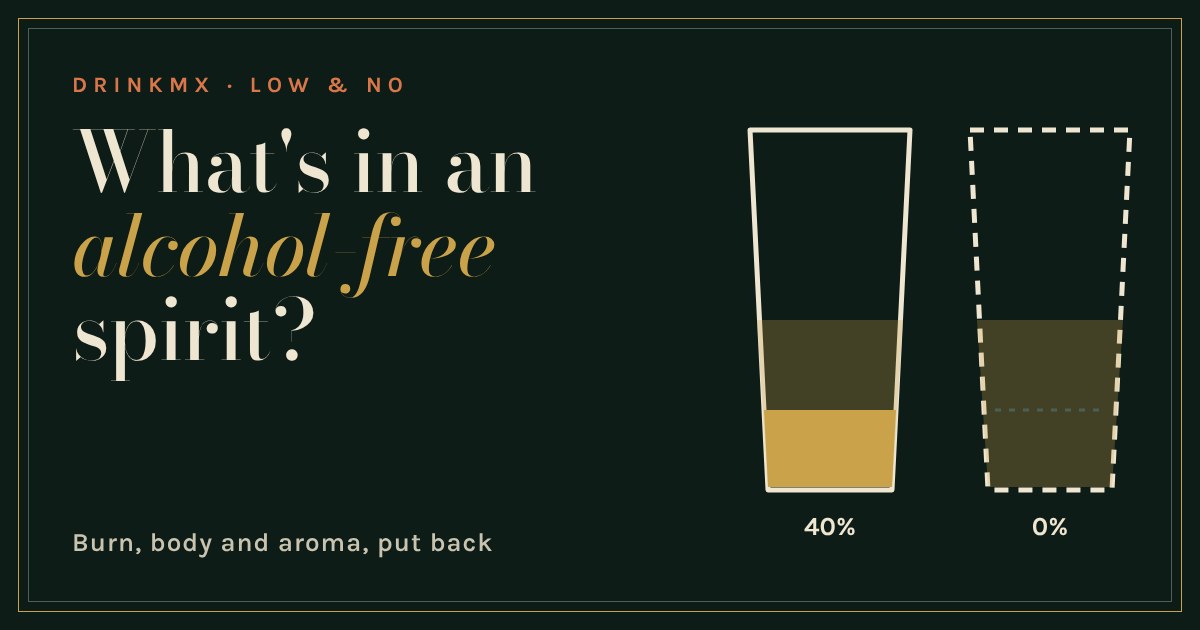
Try the Old Fashioned first. With a 60 ml pour of a 40% spirit, more than a quarter of what is in the glass is pure alcohol, which is why it burns and why it carries so much aroma. Swap in an alcohol-free spirit and the glass drops to nothing. Then tick the boxes and watch what the recipe asks you to add back. The suggestions are starting points: taste, then adjust.
What the label actually promises
"Alcohol-free" does not mean the same thing everywhere. In the UK, government labelling guidance sets alcohol-free at no more than 0.05% ABV, de-alcoholised at no more than 0.5% and low alcohol at no more than 1.2%. Across much of Europe and elsewhere, alcohol-free usually means under 0.5%, and EU law does not define it in a single way. A "0.0" bottle can still carry trace amounts. Rules are also under review in places, so read the exact percentage on the bottle.
If you are avoiding alcohol entirely, for pregnancy, medication, recovery, driving or any other reason, check that number rather than the front-of-label wording, and ask a doctor if it matters medically. Labels also cannot borrow protected names, so you will see "botanical spirit" or "alcohol-free distilled" rather than a spirit's name.
Where an alcohol-free spirit works best
Because they lack the bite, these bottles work best in drinks that lean on aroma and fizz rather than strength. A long drink with tonic or soda, a spritz or a highball lets the botanicals shine and does not ask the base to do the burning. Spirit-forward drinks such as a Martini or an Old Fashioned are the hardest, and need the most help from the fixes above. Keep a bottle cool and read the label for how long it lasts once opened, because without alcohol to preserve them many keep for a shorter time than you would expect.
An alcohol-free spirit is a flavour, not a replacement. The bite and the body are yours to put back.
Alcohol-free drinks are for adults who want the ritual and the flavour of a good drink without the alcohol. Treat them with the same care as any other drink on your bar.