What "15 bar" on the box really means
Nearly every home espresso machine is sold with a pressure number on the box: 15 bar, 19 bar, 20 bar. It reads like a horsepower figure, so more must be better. It isn't. That number is the most the pump can push when the outlet is completely blocked. It says nothing about the pressure your coffee actually sees.
Pressure only builds when something pushes back. In an espresso machine, the thing pushing back is the puck: the compacted bed of ground coffee in the basket. Fine, firmly packed coffee resists a lot; coarse coffee resists little. So the real brewing pressure is set by the coffee as much as by the pump.
Why nine is the number that matters
About 9 bar (roughly 130 psi) is the long-standing benchmark for traditional espresso, and at that pressure a shot typically runs 25 to 30 seconds. Push 15 to 20 bar through the puck and it compacts, water punches channels through the weak spots, and the shot comes out both bitter and sour. Lower-pressure recipes are also gaining ground among enthusiasts, so 9 bar is a sensible target rather than a law.
A pump rated at 15 or 20 bar is not wrong. Pumps used in home machines lose pressure as water flows, and a rating above the target gives headroom. The trouble is a machine that lets all of it through.
The number on the box is a ceiling, not a setting.
Three ways a 15 bar pump gets down to nine
- An over-pressure valve (OPV). A valve sets a ceiling below the pump's maximum and sends the excess water back to the tank. Some are set close to 9 bar, some higher, and some can be adjusted. Several enthusiast-style home machines advertise one.
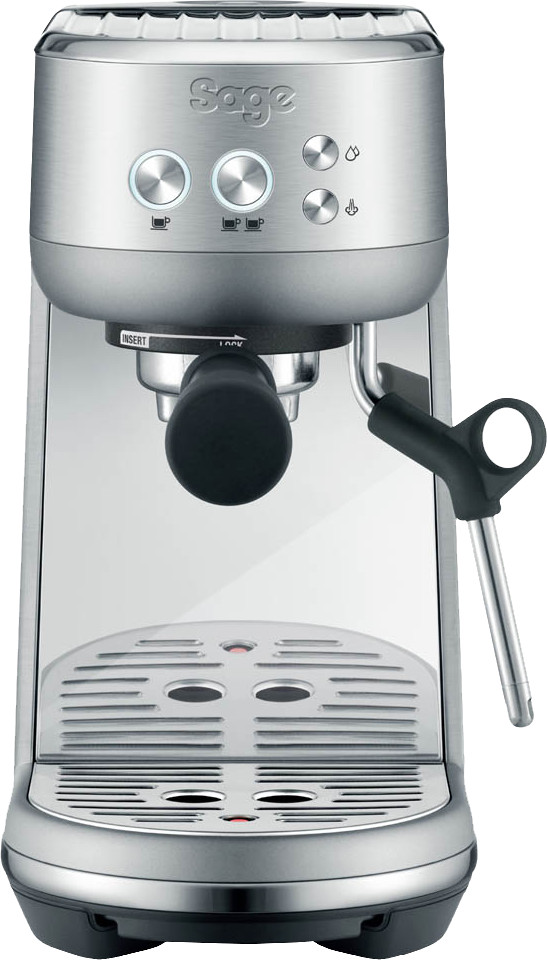
- Pre-infusion and a pressure ramp. Some machines wet the coffee at low pressure first, then ramp up to about 9 bar for the extraction. Sage describes its Bambino this way, with a 15 bar pump delivering 9 bar extraction.
- A pressurised basket. Cheap machines often ship a basket with a restrictor at its outlet, which builds pressure there whatever the coffee is doing. It is forgiving of an imperfect grind, but it also means the coffee has less say in the result. Some machines come with both a pressurised and a standard basket, so you can start easy and move on.
Machines without any of these tend to run the pump near its limit at the puck, and the reviews that point this out are worth reading before you buy.
What to look for
- A stated brew pressure, not just a pump rating. "9 bar extraction", a named pressure valve or a pre-infusion ramp all tell you someone thought about the puck. A bare "15 bar" tells you only about the pump.
- A standard basket you can swap in. A pressurised basket is a fine way to start, but you want the option to move on.
- A portafilter size you can buy baskets and tampers for. 54 mm and 58 mm are both common; check that spares exist before you commit.
- A steam wand and sensible temperature control if you plan to make milk drinks, and a decent grinder, because a fine, even grind does more for the cup than any pressure figure.
Keep an eye on caffeine too: espresso is easy to drink in rounds, so count the whole day rather than one cup.