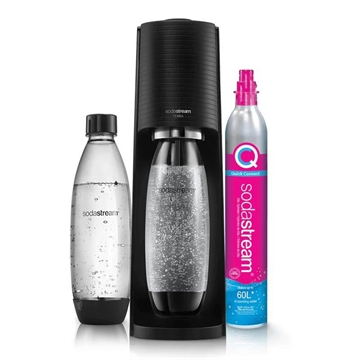
A good highball is mostly mixer. In a gin and tonic, a whisky highball or a spritz, the bubbles do half the work, and flat soda from a bottle that has been open for two days ruins the drink. A home soda maker puts fresh, properly cold fizz on tap. It also uses up gas cylinders, and that is the part people forget to plan for.
The planner below answers the question that decides whether a soda maker fits your home bar: how much fizzy water will you actually pour, and how long does one gas cylinder last at that pace?
Plan your fizz
Why fresh fizz makes a better drink
Carbon dioxide dissolves in water under pressure. A soda maker injects the gas into a bottle of water, and the bubbles you see later are that dissolved gas coming back out. Cold water holds noticeably more gas than warm water, so the single biggest thing you control is temperature: chill the water in the fridge for a few hours first, to somewhere around 1–4°C (34–40°F). Warm tap water gives weak, short-lived fizz even at the strongest setting.
The same logic explains why a highball goes flat. Every pour, stir and warm glass lets gas escape. Two things help: a cold glass, and a slow pour down the side. A freshly carbonated bottle straight from the fridge gives you the most bubbles to lose before the drink goes flat.
Gas dissolves best cold. Chill the water first, carbonate it, and mix last.
The cylinder is the running cost
The machine is a one-off buy. The gas is what you keep paying for. A standard cylinder holds 425 grams of CO2 and is sold as carbonating up to 60 litres of water, depending on how fizzy you like it. Some brands run an exchange or refill scheme, so check what is on offer where you live. The planner shows why this matters: six drinks a week with a 150 ml splash of soda each is under a litre of water a week, which stretches one cylinder to about a year. A household that makes a litre of sparkling water every day gets through one in a couple of months.
The honest rule of thumb: if you mix only one or two drinks a week and drink little fizzy water otherwise, a few bottles of mixer may be less hassle than a machine and a gas cylinder. If you drink fizzy water daily as well, the machine earns its counter space quickly, and the cocktail use is a bonus.
Make the most of it
A few habits keep the fizz in the glass and the machine in good shape:
- Carbonate plain water only. Most makers are designed for water alone, and syrups, juice or spirits can foam up and clog or damage them. Check your manual, then add flavour after carbonating.
- Chill first. Keep a bottle or two of water in the fridge so one is always ready.
- Mix last and pour gently. Build the drink over ice, then top up with soda down the side of the glass or a spoon.
- Do not carbonate the cocktail. The foam will make a mess and the machine is not built for it. The soda is the part you carbonate.
- Keep spare gas. Running out the night before a party is the usual way people find out their cylinder was empty.
The same fizzy water works for an alcohol-free drink, and it is worth keeping that option on the shelf. Soda with lime or a splash of syrup is a perfectly good drink by itself, and good fizz makes alcohol-free versions of a highball or spritz taste like they were planned.
What to look for
At any budget, a few things matter more than the brand name:
- The gas system. Check which cylinder type the machine uses and whether exchange or refill options exist where you live. A cheap machine with hard-to-find gas is not cheap.
- The bottle or carafe. Glass is easier to keep clean and looks better on a bar. Plastic bottles are lighter and harder to break. Many machines accept either; check what is in the box.
- Control over fizz. Preset levels are handy for repeating the same result. A manual push-down machine is simple and has nothing to break, but you judge the fizz yourself.
- Counter space and power. Some machines are fully manual, others need a plug for lights or preset levels. Measure the gap under your cabinets.
As with any drink, enjoy alcohol in moderation, and the planner counts only the soda, not how much you should pour of anything else.