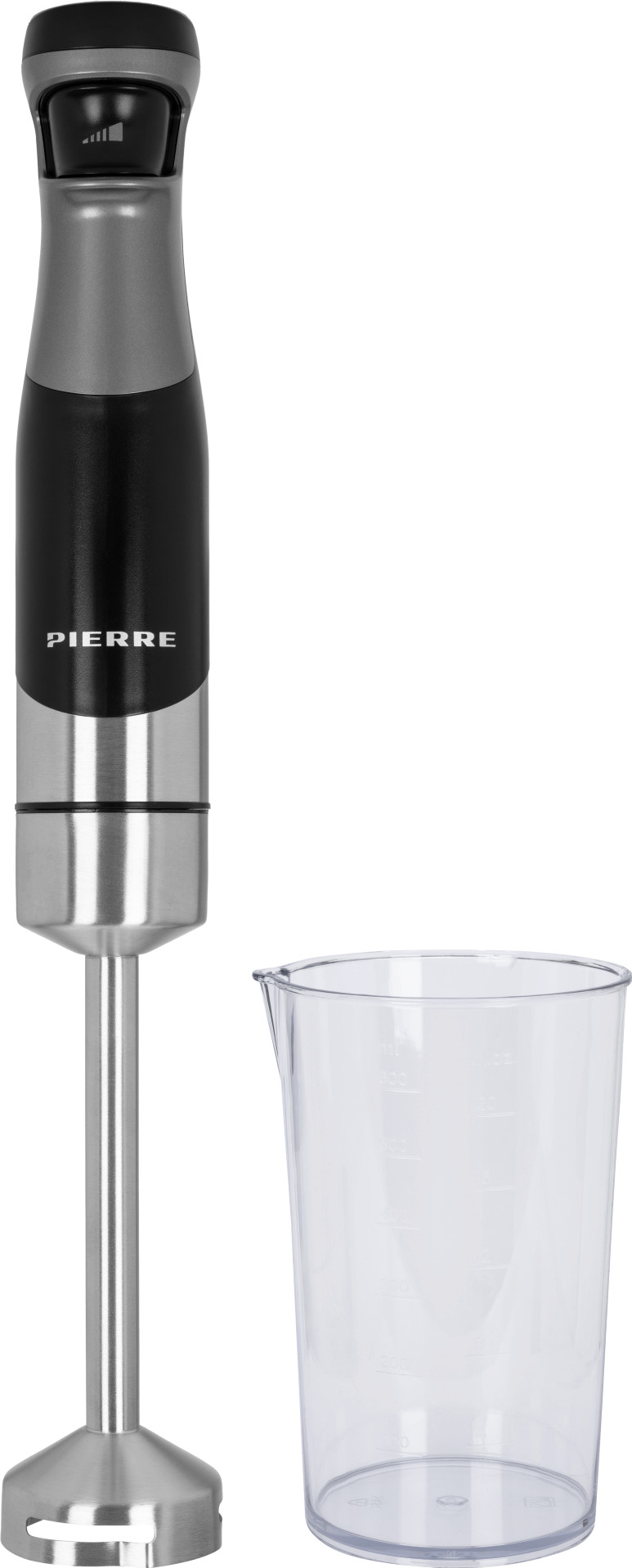
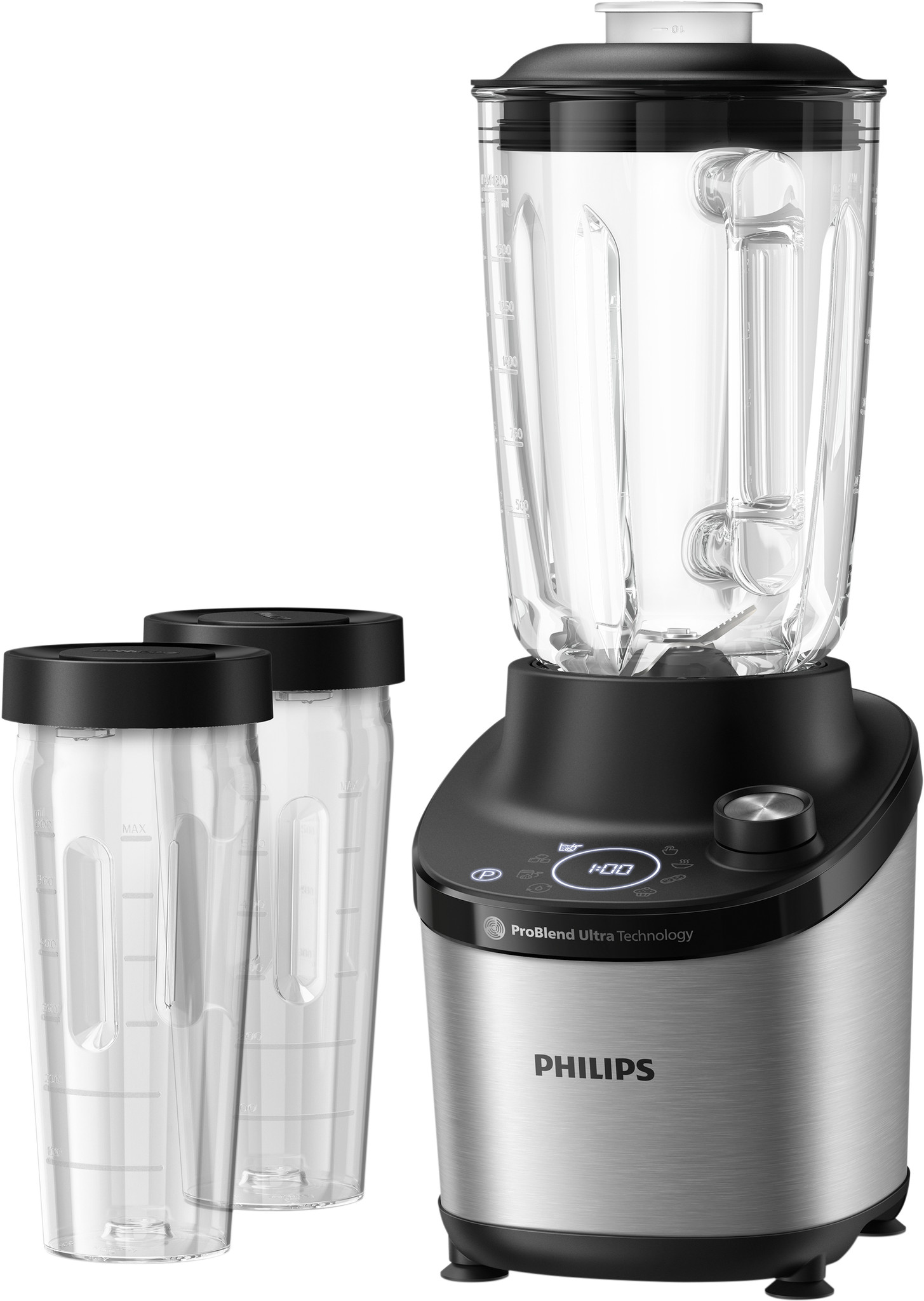
A home bar does not need much electricity. A lot of the jobs people picture a blender doing, such as a rich syrup, a fruit purée or an almond base for orgeat, are small, wet and quick. Others, like a frozen drink or crushed ice, are heavy and dry-ish and need real power. The two kinds of blender split along that line, and the split is clearer than the marketing makes it look.
A stick blender (also called a hand or immersion blender) is a motor on a stick with a blade at the bottom. You put it into whatever you are making, in a jug, a pan or a tall beaker. A jug blender is a motor in a base with a fixed jug on top and the blade in the floor of the jug. Pick the jobs you actually do below and see which one covers them.
Why the stick wins for syrup
A rich syrup is two parts sugar to one part water by weight. On the stove you heat it to dissolve the sugar. With a stick blender you can skip the heat: put the sugar and the water in a tall, narrow beaker and blend until the liquid is clear. The blade moves the water past the sugar crystals so fast that they dissolve in a minute or two. Keep it in the fridge and use it within a few weeks.
The same stick also works in the pan. If you have simmered a ginger or spice syrup, you can blend it right where it sits, rather than pouring hot liquid into a jug. That brings us to the one thing worth knowing about heat.
Hot liquid and a closed jug do not mix
Hot liquid makes steam, steam needs somewhere to go, and in a sealed jug it pushes the lid off. Most makers say to let hot liquids cool first, or to fill the jug no more than about half and leave the lid vented. Follow the manual for your model. The stick blender has no lid to blow, which is why it is the safer tool for anything warm. Blend with the blade fully under the surface, and unplug it before you touch the blade.
Ice is the dividing line
Frozen drinks and crushed ice are where a stick blender stops. Many stick blenders are not rated for ice, and ice can chip a blade or a plastic guard, so check what your manual says before you try. A jug blender with a strong motor, a heavy blade and an ice or pulse setting is built for it, and the jug holds the ice against the blade while it works. If you only crush ice for the odd julep, a canvas bag and a mallet cost almost nothing, and that is a fair reason not to buy a jug blender at all. The physics of why frozen drinks go to soup or snow is covered in the piece on balancing alcohol, sugar and ice.
Smoothness and size
A jug blender gives a smoother result on fibrous or seeded fruit and on nuts, because the blade sits low and everything is pulled through it. A stick blender leaves a few more bits, so you strain the result through a fine sieve. For a mocktail base, a shrub fruit mash or an almond milk for orgeat, that straining step is normal anyway.
Size matters too. A jug blender needs enough liquid to cover its blade, so a very small batch can just spin. A stick blender copes with small batches in a narrow beaker but takes longer on a litre or more. The batch slider above uses those two rules.
If your jobs are syrup, purée and the occasional hot mix, a stick blender is enough. If you want frozen drinks, you want a jug.
Low and no ideas
None of these jobs need alcohol. A stick blender makes a cold cordial base, a strawberry or mango purée for a mocktail, or an almond milk for an alcohol-free orgeat. A jug blender makes a frozen virgin colada, or a fruit slush with no spirit at all. Whatever you make, drink responsibly and keep the strong drinks for adults.
What to look for
Motor and blade. Power helps with hard jobs like ice and nuts, but the blade shape and a guard that is metal rather than plastic matter just as much. A tall beaker. The most useful extra with a stick blender is a narrow, deep jug that fits the head, so the blade stays submerged. An ice setting. If you want frozen drinks, look for a jug blender that lists ice in its manual, with a pulse button. Parts that wash easily. A detachable blade shaft or a jug that goes in the dishwasher means you will use it more often, and a tool you use is the one worth the money.