Low & No ·
How much sugar is in your mocktail? A sugar-cube counter for juice, syrup, tonic and ginger beer
A mocktail feels like the light choice, but one glass can carry as much sugar as a can of cola, hidden in the syrup, the juice and the mixer. Fizz and cold hide sweetness, so a drink can taste balanced and still be a lot.
Build a drink ingredient by ingredient and watch the sugar cubes stack up against the two WHO marks of 25 g and 50 g. See where the sugar hides, how to read a label, and five easy ways to cut it without losing the flavour.
A drink with no alcohol feels like the light choice. Often it is. But a glass of mocktail can carry as much sugar as a can of cola, and the sugar hides well: it sits in the juice, the syrup, the tonic and the ginger beer, and fizz masks sweetness so you don't notice how much went in. This piece shows you where the sugar is, how to count it in a few seconds, and what to change if the number is higher than you want.
Count it in sugar cubes
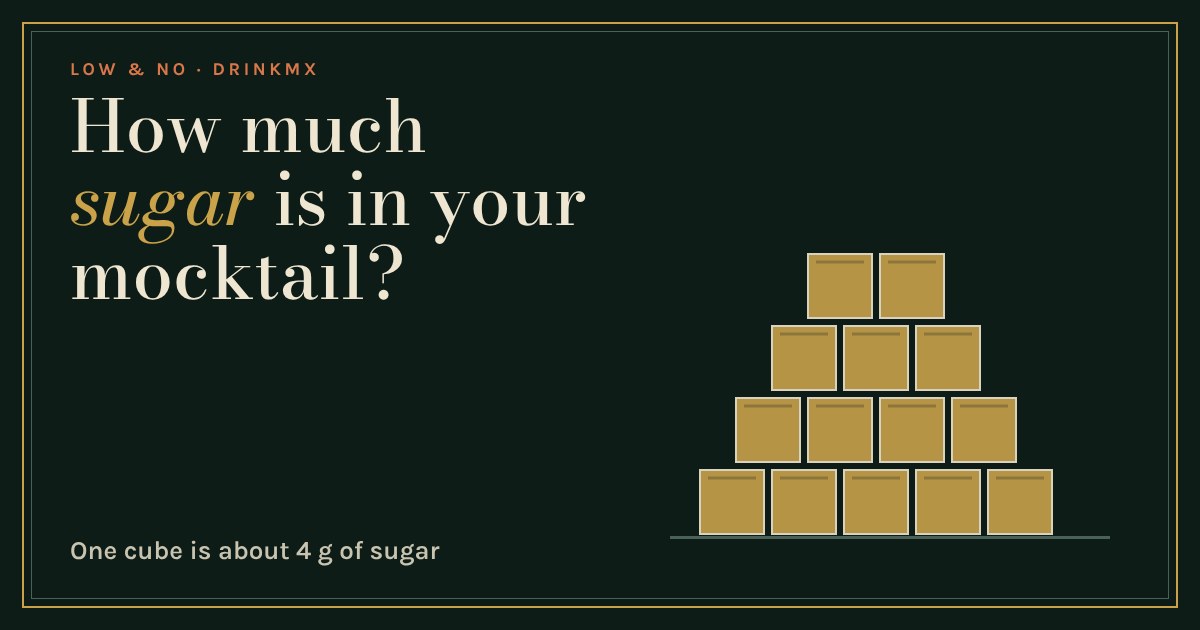
Grams of sugar are hard to picture. A sugar cube is easier. We use one cube as about 4 g, a common rule of thumb. The builder below starts with a virgin Mojito. Pick another drink, or move the sliders to build your own, and watch the cubes stack up against two reference lines.
Where the sugar hides
Three things add most of the sugar in a mocktail, and only one of them is the sugar bowl.
Syrup. A 1:1 simple syrup (equal weights of sugar and water) is about half sugar by weight. A 15 ml measure, a tablespoon, carries roughly 9 g, over two cubes. Rich syrup (2:1) is about two-thirds sugar, so the same measure is nearer 13 g. Honey and agave are no lighter: they are mostly sugar too, and more of it fits in a spoon.
Juice. Orange, apple and cranberry juice sit at around 9 to 11 g per 100 ml, and sweetened cranberry "juice drink" is at the high end. The World Health Organization counts the sugars in fruit juice as free sugars, the kind to limit, even though they are natural. Eating the whole fruit is different, because the sugar is held inside the fruit's structure.
Mixers. Regular tonic water is typically around 8 to 9 g per 100 ml, and ginger beer varies widely, from about 4 to 11 g. Cola is about 10 to 11 g. The "slimline", "light" or "zero" versions of tonic and ginger beer use sweeteners and are close to zero sugar. Soda water, citrus juice and fresh herbs are the low-sugar end: lemon juice is only about 2.5 g per 100 ml and lime less.
Fizz and cold hide sweetness, so a drink that tastes balanced can still be a lot of sugar.
How much is a lot?
The WHO guideline says free sugars should be under 10% of daily energy, and that going below 5% brings extra health benefit. For an adult eating about 2,000 kcal a day, 5% is roughly 25 g and 10% is roughly 50 g, which are the two marks on the bar. UK health advice gives a similar ceiling of about 30 g of free sugars a day for adults. These limits cover everything you eat and drink in a day, so one drink using up most of it leaves little room for anything else. This is general information, not medical advice; if you manage diabetes or follow a medical diet, follow the plan from your clinician.
Five easy ways to cut it
Swap the base before you cut the flavour. Replace half the juice with soda water or cold unsweetened tea and the drink keeps its colour and character. Use zero-sugar tonic or ginger beer where the mixer is a supporting act. Squeeze in more citrus, which adds sharpness and almost no sugar, and then you need less syrup to balance it. Make the drink taller with plain soda water rather than a sweet mixer. Finally, add bitterness or aroma, from a strong tea, fresh mint or a slice of peel, so less sweetness is needed to make the drink feel finished. The balance builders in the mocktail balance builder and the lemonade pad help you find the point where it still tastes right.
When to break the rule
Sugar isn't the villain. It gives body and softens sourness, and a drink with none can taste thin and sharp. The point is to choose it rather than have it arrive unseen. A special-occasion drink at 15 g is fine; a sparkling water with lime and a small splash of syrup is easy to keep low for every day. If you serve guests, say what is in a drink, and keep a zero-sugar option on the table. Caffeine is not a concern here, but if your mocktail uses strong tea or coffee, it counts toward the day's total too.