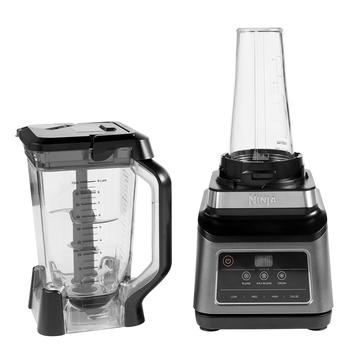
Bargain€69
Pierre Blender BL5100
A low-cost glass-jug blender that lists ice cubes among its suitable ingredients. Crush the ice first and blend in short bursts for frozen drinks.
1200 W motor · 1.5 L glass jug · 4 speed settings
Frozen drinks turn to soup or snow when the balance of alcohol, sugar and ice is off. Alcohol and sugar lower the freezing point, so a good slush needs roughly 10% alcohol and enough sugar to taste sweet when cold.
Start from a frozen Daiquiri spec, then drag the sliders to see how much rum, syrup and ice keeps it soft, plus how to run the blender and what to look for in one. Alcohol-free versions work too.
A frozen drink is a small physics problem in a glass. Too much ice and you get a flavoured snow cone that tastes of nothing. Too little, or too much spirit, and you get soup. The blender gets the blame, but most of the time the real culprit is the balance of alcohol, sugar and ice before the blades even start.
The frozen Daiquiri is the classic test case. This is the version published by Difford's Guide for one drink. Other bartenders use more ice; this one is deliberately restrained.
Method: chill a coupe. Blend the rum, lime and syrup first, with no ice, on a slow setting. Add the crushed ice and blend until smooth. Pour into the chilled glass, garnish with a lime wedge and serve with a straw. Glass: coupe or any small stemmed glass.
Notice how little ice that is. Difford's own comments warn that too much ice makes a watery, tasteless slush.
Water freezes at 0°C. Add alcohol or sugar and the mixture needs to be colder before it turns solid. That is why a bottle of vodka stays liquid in a home freezer and why a sugary slush stays soft where plain juice would set hard.
The Punch drinks magazine puts numbers on it. A drink at about 10% alcohol by volume (ABV, the share of the liquid that is pure alcohol) freezes at roughly −4°C, while a good slush is served at around −2°C. Stay near 10% and you get a soft, spoonable texture. Go much higher, like a Negroni at full strength, and it will not freeze properly. Go much lower, and you get a block of flavoured ice.
Sugar matters twice. It also lowers the freezing point, and cold dulls how sweet a drink tastes. So a frozen Daiquiri needs noticeably more sugar than the shaken one: Punch suggests about 50% more, or around 13 grams of sugar per 100 g of drink if you measure it.
Keep the drink near 10% ABV and about 13% sugar before you blame the blender.
Move the sliders and watch where the drink lands. The meters use the rough targets above, so treat them as a guide, not a lab result. Ice is counted as water once it melts into the drink.
Try the presets. Difford's spec lands a little above the sweet spot because it uses very little ice, and the optional xanthan gum is there to hold it together. "More ice, less rum" shows what happens when you give the blender more to work with and cut the spirit and raise the sugar to compensate. "Too much ice" shows the watery snow cone. Then switch to alcohol-free and see why those drinks need more care.
Once the balance is right, the machine matters less than the order of operations.
Frozen drinks with no alcohol work well, but they freeze harder because nothing is lowering the freezing point except sugar. Blend a little longer, use slightly less ice, and serve straight away. A frozen lime and ginger slush or a blended strawberry and lime slush are good places to start.
For boozier drinks, dilute first. A frozen Negroni will not set without a mixer such as blood orange juice to bring the strength down.
One more thing: cold masks the taste of alcohol, so a frozen drink can be stronger than it seems. Sip slowly, count them as one drink each and never drive after drinking.
Whatever you spend, these are the points that matter for frozen drinks:
The picks below are examples at different budgets. Links are affiliate links, so we may earn a commission, and the prices on the product pages are live.
Affiliate links, marked sponsored. We may earn a commission at no extra cost to you. Kit for this drink at three prices. Prices checked 13 Oct; every shop is on each product page.
A low-cost glass-jug blender that lists ice cubes among its suitable ingredients. Crush the ice first and blend in short bursts for frozen drinks.
1200 W motor · 1.5 L glass jug · 4 speed settings
A large jug with a pulse control and ice-crushing programmes, which suits batches of frozen drinks for two or more.
1200 W motor · 2.1 L jug · Ice crush and pulse
A heavier glass-jug blender with a dedicated ice programme and variable speed, for people who blend frozen drinks often.
1.8 L glass jug · Ice programme · Pulse