Why is stout black? Roasted barley, and a colour scale you can drag from gold to black
Why is a stout so dark? The colour and the coffee-like taste come from the same place: roasted barley, grain that was never malted and is roasted until it is nearly black. A small amount darkens a whole batch.
Drag a colour slider, or tap a style, to see where Irish stout, sweet stout, American porter, American stout and imperial stout sit on the beer colour scale, with strength and bitterness from the BJCP guide. Plus the surprising history: stout once meant strong, and roasted barley is younger than you think.
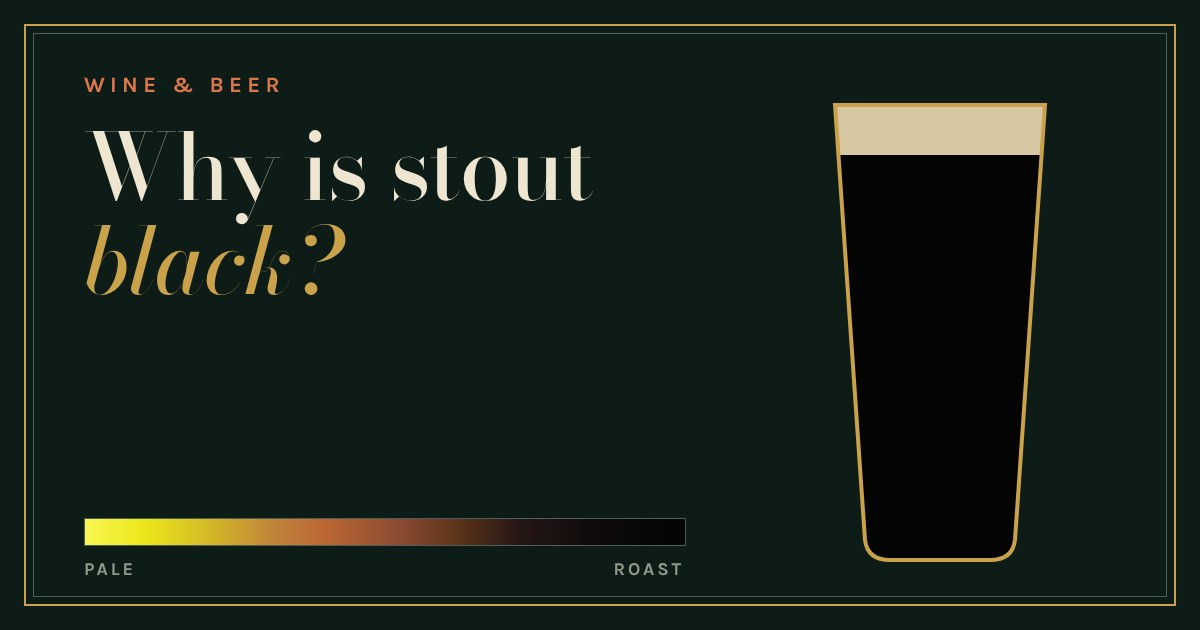
Pour a stout and the first thing you notice is the colour: a glass so dark that light barely gets through. It looks like it must taste of something burnt, and in a way it does. The colour and the flavour come from the same place, the roasting of the grain.
Dark grain, dark beer
Most beer gets its colour from malt: barley that has been soaked, allowed to sprout a little, then dried in a kiln. Pale malt is dried gently and stays pale. Darker malts are kilned or roasted harder, and the heat does two things at once. It turns starch into sugar, and then it caramelises that sugar, which is why dark grain smells of toast, chocolate and coffee.
Stouts push this much further than most beers. A stout recipe adds a portion of heavily roasted grain, and the style guide for Irish stout asks for dark roasted malts or grains "enough to make the beer black". The strongest tool is roasted barley: barley that was never malted (never sprouted), just roasted until it is nearly black. How dark the beer ends up depends on how much is used, and how long and how hot the barley was roasted.
It is potent. A small amount of roasted barley darkens a beer a great deal, which is why one stout recipe can use only a few hundred grams of it in a 20-litre batch.
How colour is measured
Brewers rate beer colour on the SRM scale (Standard Reference Method). A pale lager sits around 2 to 4. Amber ales are in the teens. The style guide gives stouts a range of roughly 25 to 40, which is the dark end of the scale. Try it below: drag the slider to see the colour, or tap a style to see where it sits and what the guide says about it. The colours on screen are approximate.
Porter, stout and what the words mean
Ask which is which and you will usually hear that porter is made with black malt and stout with roasted barley. That is the modern shorthand in style guides. The beer historian Ron Pattinson argues that those guidelines were written long after the fact, and that historically there was no difference in ingredients or method: a brewery's porter was simply weaker than its stout.
"Stout" once meant strong, not dark.
The timeline is a little surprising. Black malt arrived in 1817. Roasted barley, though, was not used in British brewing until the late nineteenth century, because the law banned unmalted grain, and Guinness only began using it in the twentieth century. Guinness's roasted unmalted barley is described as a relatively modern addition, part of the recipe since the mid-twentieth century. So dark beer is older than the grain most people now associate with it.
Why it tastes of coffee
Heavily roasted grain tastes much like roasted coffee beans, for the same reason: the same browning reactions at high heat. That is why stouts so often get described with words like coffee, dark chocolate and toast. The bitterness is a separate dial. Hops add bitterness too, which is why the guide gives each style an IBU range alongside its colour.
Roasting can also stop some of the starch from fermenting, so very dark grain does not simply add alcohol. Strength is mostly decided by the amount of fermentable sugar in the recipe, which is why a black Irish stout can sit at under 5% while an imperial stout reaches 8% to 12%.
What to look for
- Colour is not strength. A black beer can be light in alcohol. Check the ABV on the label, and go for small pours with the strong ones.
- Sweet or dry. Roast gives bitterness. If you want the roast without the bite, look for the sweet or milk style, which lactose softens.
- Roast, not burnt. Coffee and chocolate notes are the aim. A harsh, ashy taste means too much roast for you, so move one step down the colour scale.
- Not all dark beers are stouts. Porters, dark lagers and some brown ales sit in the same colour range, so the name on the glass tells you less than the numbers do.
Enjoy it in moderation, and never drive after drinking. Alcohol-free dark beers exist if you want the roast without the alcohol.