Why is rosé pink? Skin contact, and a clock that turns onion skin into deep pink
Rosé is not made from pink grapes. It is made from black grapes, and the colour comes from how long the juice sits on the skins, anywhere from a quick press to around 20 hours.
Drag a skin-contact clock to see how hours, grape type, colour and tannin fit together, and why a darker pink does not mean a sweeter wine.
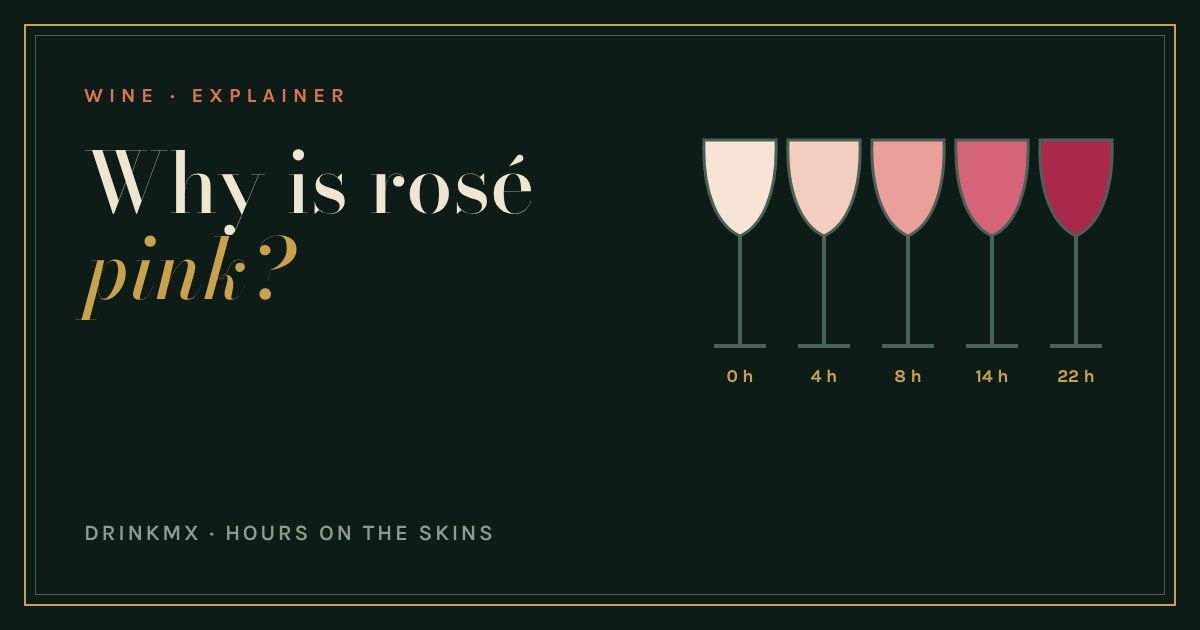
Rosé has no pink grapes behind it. It is made from black grapes, the same family that gives red wine, and the whole trick is how long the juice is allowed to sit on the skins. A few hours and you get a pale glass; a day and you are heading towards red.
Where the colour lives
Inside a black grape the pulp and juice are nearly colourless. The pigments, called anthocyanins, sit in the skin. Crush the grapes and the juice starts to pull colour out of the skins, a little more with every hour, which is why winemakers talk about skin contact time. Temperature matters too: warmer must extracts faster than cold.
That also explains why almost all rosé is made this way. The usual routes are:
- Direct press. Whole bunches or destemmed grapes go straight into the press and the juice runs off almost at once. The skins only tint it during gentle pressing, so this gives the palest wines.
- Short maceration. The crushed grapes sit in a tank, usually somewhere between 2 and 20 hours, and the winemaker presses once the juice reaches the shade they want. This gives control over the colour.
- Saignée (French for "bleeding"). A portion of juice is drawn off a tank that is mainly making red wine, early on, and fermented separately. It is less common today and often a by-product of making a stronger red.
Blending red and white wine is how most pink sparkling wine from Champagne is made, but for still rosé in the EU it is generally not allowed, so the skin-contact routes above are the story.
Drag the clock
Pick a grape type and drag the skin-contact time. The glass shows an approximate colour and the note underneath says what that tends to mean in the glass. It is an illustration of the rule of thumb, not lab data: real timings depend on the grape, the temperature and the winemaker's goal.
Why darker does not mean sweeter
It is easy to assume a deep pink wine is sweet and a pale one is dry. Colour only tells you about extraction from the skins. Sweetness is a separate decision: it depends on how much sugar is left after fermentation. Plenty of deep-coloured rosés are fully dry, and some pale ones are off-dry. If it matters, check the label for words such as "dry", "sec" or "trocken", or look at the sugar style printed there.
What colour does hint at is style. Paler wines are usually lighter, crisper and more subtle. Darker ones tend to have more body, more fruit and a bit of grip. That is a tendency, not a rule, because the grape, the ripeness and the winemaker all push on it.
Colour is the winemaker's clock, not a sweetness label.
Is paler better?
No. Pale rosé became fashionable, especially from Provence, and many producers aim for it, but a deeper wine is not a mistake. Pale wines are often made for freshness and easy drinking. Darker ones can stand up to barbecue, spicy food and richer dishes. The right choice is the one that suits the meal and your taste.
Also keep in mind that the shade in the bottle can be influenced by the bottle itself: clear glass shows the colour, tinted glass hides it, so a pale pink can look darker or lighter on the shelf than it does in a glass.
What to look for
- Method on the back label. "Direct press" or "pressed" hints at pale and delicate; "skin contact" or "macerated" hints at more colour and body.
- Grape. Pale-skinned varieties such as Grenache or Cinsault give lighter colour at the same skin time than deep-skinned ones such as Syrah or Malbec.
- Dryness. Don't judge it by colour. Read the label.
- Freshness. Most rosé is made to be drunk young, so a recent vintage is usually a safe bet unless the producer says it is meant to age.
Rosé is wine, so the usual advice applies: pace yourself, drink water alongside, and don't drive afterwards. A glass of rosé is typically around 11–13% alcohol, which is the same as many whites and lighter reds. An alcohol-free rosé-style drink works just as well for the picnic.