Why is mezcal smoky and tequila isn't? How the agave is cooked, with a method picker
Pour a mezcal next to a blanco tequila and one smells of campfire, the other of cooked fruit and pepper. Both come from agave, so where does the smoke come from? Mostly from one step before fermentation: how the agave heart is cooked.
Pick a cooking method (earthen pit, brick oven or autoclave) and see what it does to smoke, sweetness and green plant flavour, then learn what else separates tequila from mezcal and what to look for on a label.
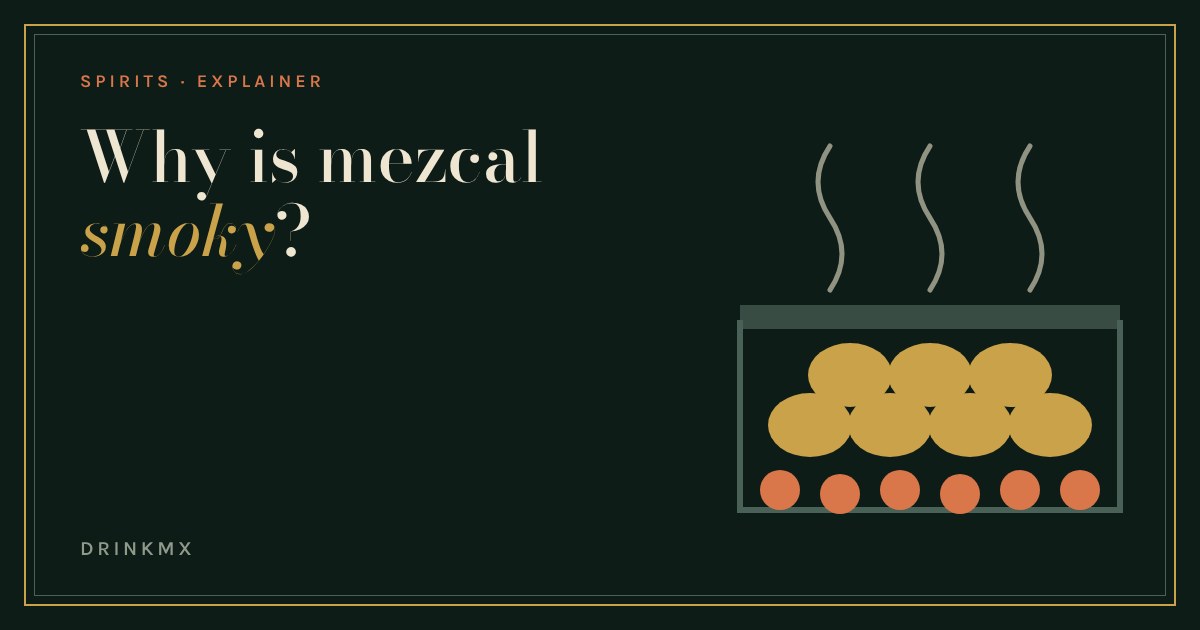
Pour a mezcal next to a blanco tequila and the first difference is obvious: one smells of campfire, the other of cooked fruit and pepper. Both come from the same plant family, both are distilled from agave, and tequila is legally a kind of mezcal. So where does the smoke come from? Mostly from one step that happens before fermentation or distillation: how the agave is cooked.
Agave has to be cooked first
An agave plant stores its energy as long-chain sugars (fructans) that yeast cannot eat. Heat breaks them into simple sugars, which is why every tequila and mezcal starts by cooking the piña, the heart of the plant that looks like a giant pineapple. Cooking also turns the pulp soft and sweet and creates new flavours, much as roasting does to a vegetable or a coffee bean.
The method is what splits the two. Traditional mezcal is often cooked in an earthen pit: a hole lined with hot volcanic stones and a wood fire, the piñas piled on top, then covered with earth and fibre mats. Smoke and heat soak in for days. Tequila is traditionally cooked in brick or masonry ovens, and many larger producers use an autoclave, a steel pressure cooker that steams the agave in hours. The oven and autoclave never touch smoke, so what you taste is cooked agave, not fire.
What else separates them
Cooking is the biggest flavour lever, but it is not the only difference. Here are the usual ones, with the caveat that rules and practice vary by producer.
Mezcal is also an umbrella. Tequila, raicilla and bacanora are all agave spirits with their own designations. When someone says "mezcal" they usually mean the Oaxacan-style spirit that is pit-cooked, but a bottle that carries the plain "mezcal" label can legally be oven- or autoclave-cooked, so the label alone does not guarantee smoke.
The smoke is not added. It is the agave remembering the fire it was cooked in.
Two more things that shape the glass
The plant. Blue Weber has a fairly consistent character: citrus, pepper, cooked agave. Mezcal producers draw on dozens of species and wild plants, so one bottle can taste of tropical fruit, another of earth and herbs. Many agaves take years to mature, from several years for espadín to decades for some wild kinds.
The still. Both are distilled, usually twice. Small mezcal producers often use direct-fired copper or clay pot stills, which keep more of the heavy, smoky compounds. Large tequila producers often use column stills or multi-stage setups that make a lighter, cleaner spirit.
How to use this when you pour
If a cocktail wants clean citrus and pepper, like a Margarita, a 100% agave blanco tequila is the easy choice. If you want smoke to play against grapefruit, ginger or a bitter liqueur, a pit-cooked mezcal is the move. A common trick is a split base: half tequila, half mezcal, so the smoke supports rather than shouts.
For a low or no version, an alcohol-free "smoked citrus" can be done with a pinch of smoked salt on the rim of a grapefruit and soda. It will not taste like mezcal, but it borrows the same idea: smoke against bright acid.
What to look for on a label
- "100% agave" for tequila, so the sugar is not stretched with other sources.
- The category on a mezcal: plain mezcal, artisanal or ancestral. The last two have stricter, more traditional methods.
- The agave species and, where given, the cooking method. A label that says "pit-cooked" or "horno" is telling you where the smoke comes from.
- The strength. Bottles are commonly 40–48% ABV. Higher is not better, just stronger.
As always, spirits are for adults, so pour slowly, measure your drinks and never drive after drinking.