How to express a citrus twist: why the peel oil matters, with a twist lab
A citrus twist is not there to be eaten. It is aroma. The coloured part of the peel holds tiny pockets of oil, and pinching the strip over the glass sprays a fine mist of it onto the surface.
Learn how to cut a strip with little pith, why the coloured side faces the drink, how height changes the strength, and which fruit suits which drink. Use the twist lab to see where the oil lands, and try the same trick on tonic or a mocktail.
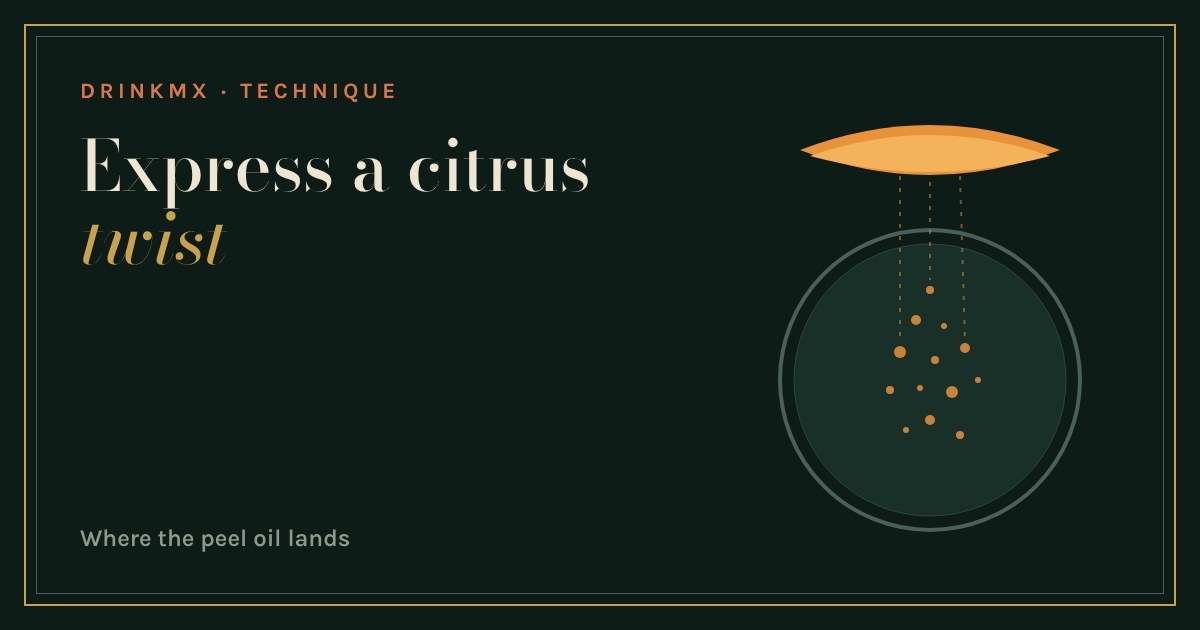
A twist is not a garnish you eat or even look at. It is a squirt of aroma. The coloured part of a citrus peel is full of tiny pockets of oil, and pinching the peel over a drink sprays a fine mist of that oil onto the surface. You smell it before you sip, and the first taste carries a bright citrus note with none of the sweetness or sourness of juice.
What is in the peel
A citrus peel has two layers. The outer, coloured layer is the zest (the flavedo). It holds the oil, which is mostly a compound called limonene, the smell you get when you scratch an orange skin. Under it sits the white pith (the albedo), which is bitter and holds none of the fragrance you are after. So a good twist is mostly zest with only a thin film of pith on the back, which keeps the strip from curling or tearing.
Cut it, then express it
Use a firm, clean, unwaxed lemon, orange, lime or grapefruit. With a peeler or a sharp knife, cut a strip roughly 12 mm (½ inch) wide and as long as the fruit allows. Trim any ragged edges so it looks tidy.
- Hold the strip between thumb and forefinger of each hand, coloured side facing the drink.
- Hold it over the glass, horizontally.
- Pinch the long sides together, or twist the two ends in opposite directions. You should see a faint mist, and the surface may shimmer.
- Decide what happens to the peel: drop it in, perch it on the rim, or discard it.
Cut each twist just before you use it. A cut peel loses its oil quickly, and even chilled in a sealed box with a damp paper towel it lasts little more than a day.
Try it: the twist lab
This is a simple picture, not a measurement. Pick a fruit, set how high you hold the peel and which side faces the drink, then press Express. Each dot is a bit of oil landing on the surface.
Why height and side matter
The oil leaves the skin in a cone. Close to the glass, the cone is narrow, so more of it lands in the drink and the aroma is strong. Higher up, the mist spreads wider and thinner, and more of it misses the glass, so the effect is gentler. That is why you can dial the intensity up or down just by moving your hands.
The side matters more. Coloured side down points the oil at the drink. Pith side down sprays it into the air and gives you only a faint smell and a bitter strip sitting on top. The exact heights in the lab are a rule of thumb, not a standard. Taste and adjust.
Citrus juice changes how a drink tastes. Citrus oil changes how it smells, and smell is most of what you call flavour.
Which twist for which drink
There are no hard laws, but these pairings are common.
| Drink | Usual twist |
|---|---|
| Dry Martini | Lemon |
| Old Fashioned | Orange |
| Negroni | Orange |
| Sazerac | Lemon, then discarded |
Lemon is sharp and clean, and suits clear, dry drinks. Orange is rounder and sweeter and sits well with whiskey, bitters and vermouth. Grapefruit works with gin, tequila and bitter-sweet drinks. Lime is the least used for twists, because its peel is thin and its oil is sharper.
Rim, flame or drop it in?
Some bartenders wipe the peel around the rim before dropping it in. Others skip it, because the oil on the rim can taste bitter on the first sip. Both are fine; try each and see which you like. A flamed twist warms the peel over a match so the oil briefly flashes. It adds a faint toasted note and some theatre, but it is optional and needs care around hair, sleeves and open flames.
A twist with no alcohol
The same trick works on drinks with no spirit at all. Express a lemon or grapefruit peel over a glass of tonic or soda water over ice, or over a mocktail that tastes a little flat. You add aroma with no sugar, no extra acid and no alcohol.
What to look for
Four things matter at any budget. The fruit should be firm, with thick, glossy skin. It should be unwaxed or well scrubbed. The strip should have little pith on it. And you should cut it fresh, for each drink. Any sharp peeler will do; nothing here needs special kit. As always, enjoy drinks responsibly.