Shaken or stirred? What each does to chill and dilution, with a clock you can drag
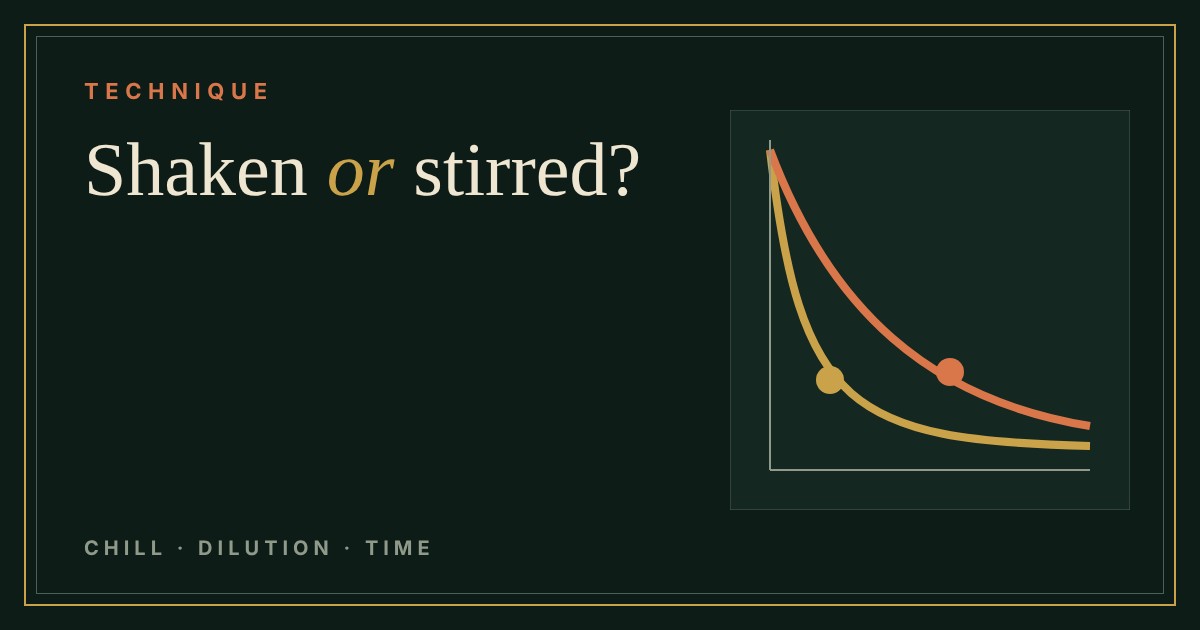
Shaking and stirring both chill a drink and add water from the ice. They differ in speed and texture. A shaken drink is coldest in about 12 seconds and ends up cloudy and lively; a stirred one takes 20 to 30 seconds and stays clear and silky.
Drag a clock to see how temperature and dilution change over time, with dry or wet ice, and learn when to shake, when to stir and when to break the rule.
Bartenders argue about shaking and stirring, but the real question is simple: what does each one do to the drink? Both chill it and both add water from the melting ice. They differ in how fast, and in what else happens along the way. Once you see that, the old rule "shake with juice, stir without" stops being a rule and becomes common sense.
What the ice is doing
Ice at about 0°C or colder takes heat from the drink. As it does, the surface melts, and that meltwater is dilution: water that ends up in your glass. Dilution is not a flaw. A whisky cocktail with no water tastes hot and tight; a little water opens it up and softens the alcohol. Too much and it tastes thin.
Shaking is violent. The ice smashes against the drink and the tin, so heat moves fast and the drink reaches its coldest point in roughly 12 seconds. Difford's Guide puts a well-shaken drink at about -5°C to -8°C, with around 20% dilution from dry-surface ice. Stirring is gentle, so the same job takes longer, often 20 to 30 seconds or more, and the drink ends up a little warmer and a little less diluted. Sources differ on exact numbers, because ice, glass and technique all change them.
Drag the clock
Why a shaken drink is cloudy
Shaking does more than chill. It knocks tiny air bubbles and ice shards into the liquid, which is why a shaken drink looks cloudy for a moment and has a lighter, livelier texture. That is a good thing for a Daiquiri or a Whiskey Sour. It is also the reason shaking is the right tool when the drink contains citrus juice, cream, egg white or syrup: those need hard mixing to blend, and they hide the extra chill and water.
Why a stirred drink is clear
A Martini, Manhattan or Negroni is only spirits, vermouth and bitters. They blend with almost no effort, so what you want is chill and a measured amount of water without the bubbles. Stirring gives a clear, glossy drink with a silkier feel, and it gives you control: you can taste and stop. A common range is about 20 to 30 seconds with plenty of cold, hard ice; one source quotes up to 45 seconds when the ice is poor.
Shake what has juice, cream or egg in it. Stir what is only spirits.
The rule of thumb, and when to break it
Shake for sours, stir for spirit-only drinks. Break it when it helps. Some people shake a Martini because they like it colder and sharper; that is a preference, not a mistake. A Manhattan needs more stirring when your ice is wet, and less when it is dry and very cold. Big, hard, cold ice always gives you more control than small wet cubes, because it melts slowly. Whatever you do, stop once the drink is cold: after that you are just adding water.
No alcohol? Same thing
The same physics applies to alcohol-free drinks. A mocktail with juice and syrup wants a short, hard shake. Cold tea or a spirit-free "stirred" drink made of tonic, bitter and sweet is better stirred gently so the fizz stays. Chill is part of the flavour, not an extra.
As always, enjoy drinks in moderation, and never drive after drinking.