Why a Bramble is poured over crushed ice: the spec, the blackberry drizzle and a builder
The Bramble is a gin sour with a trick: a blackberry liqueur poured over crushed ice so it bleeds down through the drink. Dick Bradsell made it in London in the mid-1980s, built from childhood memories of picking blackberries on the Isle of Wight.
Here is the spec in ml, why the lemon has to be generous, what crushed ice does that cubes can't, and a builder where you change the measures, watch the drizzle in the glass and see if the drink leans sharp or sweet. There is an alcohol-free version too.
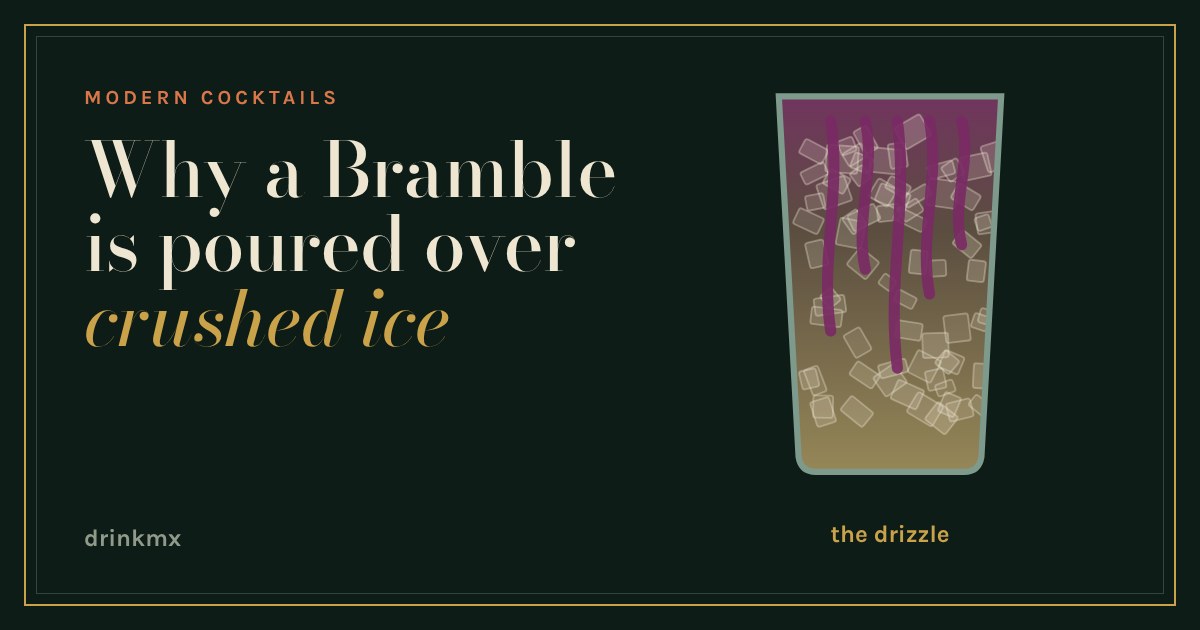
The Bramble looks like a gin sour that someone has painted on. A dark blackberry liqueur is poured over a glass of crushed ice and bleeds down through the drink in purple streaks. It is also one of the few modern classics with a known author: Dick Bradsell, who made it in the mid-1980s while running the bar at Fred's Club in Soho, London. He wanted a drink that tasted properly British, and he built it around his childhood memories of picking blackberries on the Isle of Wight.
The spec
Method: shake the gin, lemon juice and syrup hard with ice until the tin is frosty. Strain into a chilled rocks glass (an old fashioned glass) packed with crushed ice. Then pour the liqueur slowly over the top in a circle and add the garnish. Serve with a short straw.
No crushed ice? Wrap ice cubes in a clean tea towel and bash them with a rolling pin until the pieces are about the size of peas. Use it straight away, before it melts into a slush.
Why it works
Under the purple, this is a gin sour: gin, lemon and sugar syrup in the ratio 4:2:1. The blackberry liqueur is an extra sweetener that brings fruit with it, so the lemon has to be generous. Bradsell stressed that the sour has to balance the sweet liqueur, and it is why the Bramble stays fresh instead of tasting like jam.
The crushed ice does two jobs. It chills the drink faster than cubes because there is far more surface for the drink to touch, and it melts quickly, so water keeps adding itself as you sip. That dilution is part of the recipe: it stops a drink with a sweet liqueur from turning cloying.
The drizzle is not just for show. The sugary liqueur runs down through the ice and collects lower in the glass, so the first sips are sharp and gin-led and the last ones are darker and jammier. Stir it in and you get an even drink; leave it and the drink changes as you go.
A Bramble is a sour with a slow reveal: tart on top, blackberry underneath.
Build your own Bramble
Move the sliders to change the spec. The glass shows how the liqueur sits, and the balance bar shows whether the drink leans sharp or sweet.
Bend the rules
Keep the gin. Bradsell noted that a vodka Bramble loses the gin's character. Juniper is what stands up to the lemon and the blackberry. A London dry gin is the easy choice.
Swap the fruit. Any blackberry liqueur works, and a raspberry liqueur makes a lighter, brighter version. Bradsell's first garnish was a raspberry, because blackberries were hard to find in London then.
Make it long. Top the glass with 40 ml of soda for a tall, slow Bramble. That makes each mouthful weaker, but the alcohol in the glass is the same, so it is not a lighter drink.
Make it alcohol-free. Use 50 ml of an alcohol-free gin-style spirit in place of the gin, 25 ml of lemon juice and 10 ml of syrup, shake and strain over crushed ice, then drizzle 15 to 20 ml of blackberry cordial or syrup on top. Add a splash of soda if you like it longer. Alcohol-free spirits taste softer than gin, so go easy on the sweetener and taste first.
The classic version holds about two UK units, so it is a drink to sip. Pace yourself, drink water between rounds, and never drive after drinking.
Getting it right
- Fresh lemon, always. The recipe leans on it; bottled juice goes flat and makes the drink taste sweeter and duller.
- Properly crushed ice. Pea-sized pieces, packed full. Large chunks leave gaps and the drink will not chill or dilute evenly.
- A slow, circular pour. Pour the liqueur last, and slowly, and it threads through the ice instead of sinking in one lump.
- A balanced liqueur. Crème de mûre varies in sweetness between makers, so start with 15 ml and move it up or down by a spoonful.