What is tea oxidation? Why green, white, oolong and black come from one plant, with a slider
Green, white, oolong and black tea all come from the same plant, Camellia sinensis. What separates them is how far the leaf is allowed to oxidise after picking, and whether the maker stops it with heat.
Drag the slider from green to black to see how the leaf, the cup and the best brewing water change, and why pu-erh and herbal infusions don't belong on the same scale.
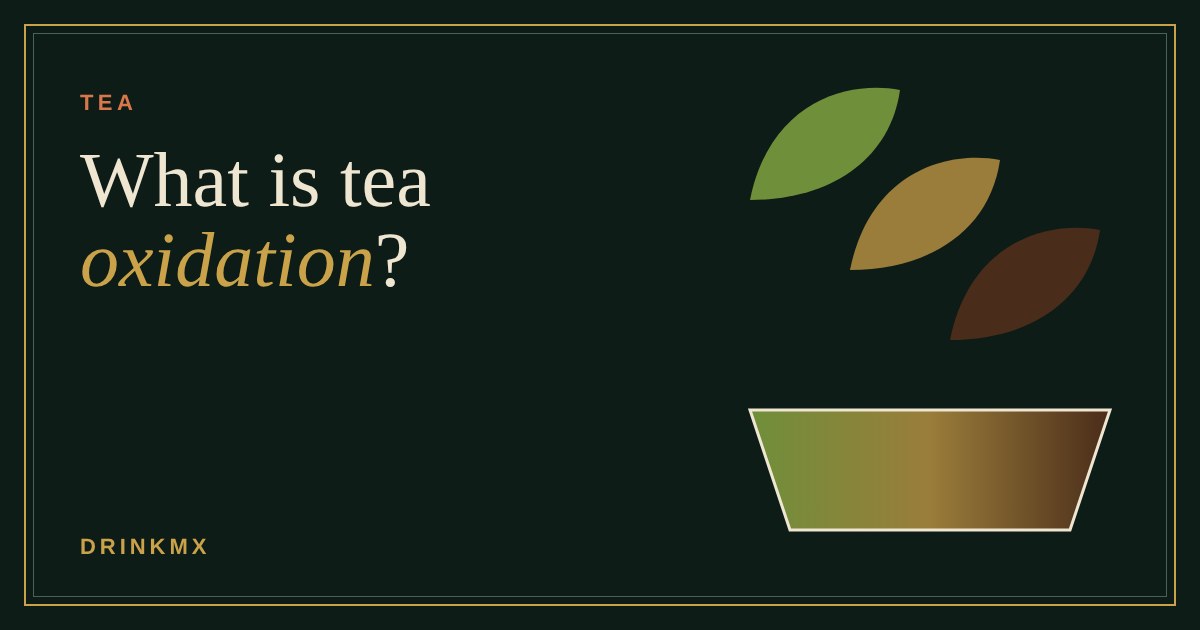
Green, white, oolong and black tea are not four different plants. They all come from the leaves of one species, Camellia sinensis. What separates them is what happens to the leaf after picking, and above all how far it is allowed to oxidise.
What oxidation actually is
When a tea leaf is bruised or rolled, enzymes inside it react with oxygen and turn the leaf's pale compounds into darker, richer ones. It is the same reaction that turns a cut apple brown. In tea, it moves the cup from grassy and fresh towards malty, fruity and deep.
Oxidation is not the same as fermentation. Fermentation means microbes at work, and in tea that really only applies to post-fermented teas such as pu-erh. Every other tea on this page is about oxidation alone, which is a chemical reaction in the leaf, not a living culture.
Drag the leaf from green to black
Notice that white tea sits between green and oolong on the slider, but it is not really a halfway point. Its character comes from picking young buds and withering them gently, not from controlled oxidation, so treat the slider as a guide to flavour rather than a strict ladder.
Four routes to four teas
Most tea making follows the same short chain, and each type changes one or two links.
The plant is the same. The timing is the recipe.
Where pu-erh and herbal "teas" fit
Pu-erh is a different idea again. It is a post-fermented tea, meaning microbes work on the leaf over a long time, so it doesn't sit on the oxidation slider at all. Herbal infusions such as peppermint or chamomile are not tea in the strict sense, because they don't come from the tea plant. They are often called tisanes, and they are naturally free of tea's caffeine.
Why this changes how you brew
Less oxidised leaves keep more of their sharp, bitter-leaning compounds exposed, so they punish hot water and long steeps. Darker, more oxidised leaves are generally more forgiving and cope well with hotter water. That is the reason for the common advice to cool the kettle for green tea and let it rip for black. For full time-and-temperature windows, see our guide on how long to steep tea.
Caffeine is worth a thought too. All true teas contain it, and the amount in your cup depends more on how much leaf you use and how long it steeps than on the colour of the leaf, so don't assume black tea is always the strongest. If you are sensitive, go easy in the evening.
What to look for
When you choose a tea, a few things matter at any budget. Read the type on the label so you know roughly what oxidation to expect. Look for whole or large leaf and a recent harvest or packing date, since oxidised and unoxidised teas both fade. Store the tea airtight, away from light, heat and strong smells. And try one tea from each end of the slider side by side: it is the quickest way to taste what oxidation does.