How cold should wine and beer be? A serving-temperature guide by style
Serve white wine too cold and red too warm, and you taste less of both. The same goes for beer: a fridge-cold stout tastes thin, a warm lager tastes flat.
Pick a style in the picker below to see its ideal range in °C or °F, and what a few degrees changes in the glass.
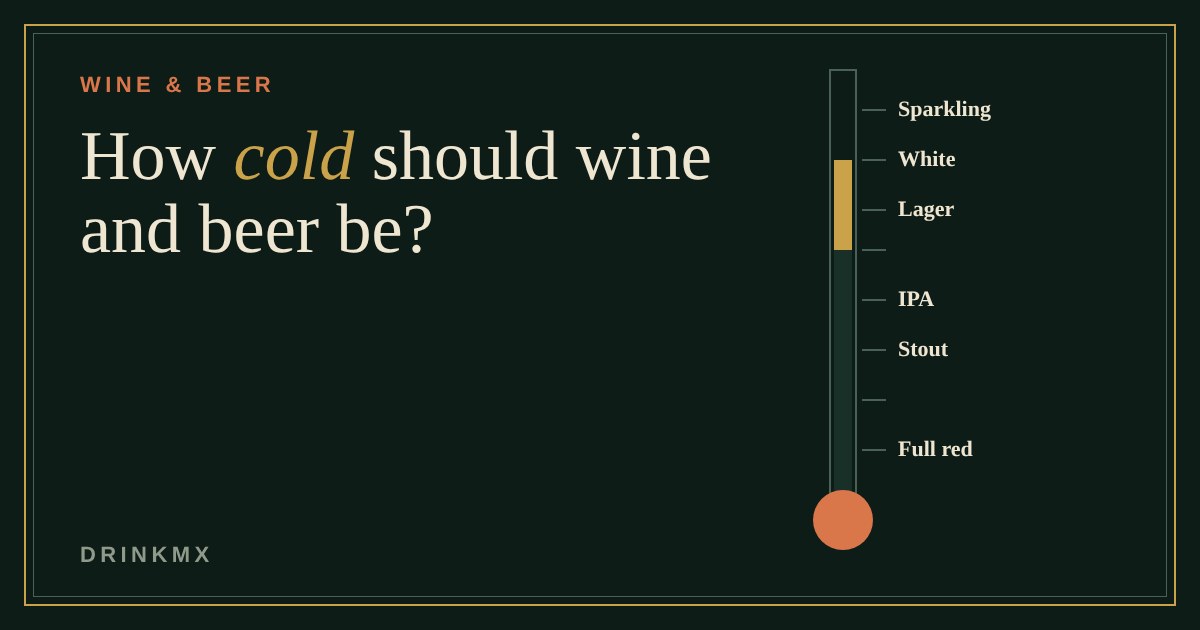
Most people serve white wine too cold and red wine too warm. The same goes for beer: a stout straight from the fridge tastes like cold coffee, and a warm lager tastes flat and sweet. Temperature changes what you smell and taste, and getting it roughly right costs nothing.
What cold does to a drink
Cold slows down the aroma molecules that escape from the glass, so the colder a drink is, the less you smell. It also makes bitterness and acidity feel sharper and sweetness feel weaker, and it makes tannin (the dry, grippy feeling in red wine) feel rougher. Warmth does the opposite: aromas open up, sweetness and alcohol come forward, and a drink that is too warm starts to taste heavy and flabby.
That is why the rule is simple. Drinks meant to be crisp and refreshing (sparkling wine, light whites, lagers) go colder, which keeps them clean. Drinks meant to show depth (full reds, stouts, strong ales) go warmer, which lets the aromas out. Tap a style below to see its range.
The fridge and the room are both wrong
Look at the dashed marks. A fridge sits near 4°C, which is right for a lager and too cold for nearly everything else. A living room sits near 20°C, which is too warm for almost every white and for most beers. So for most bottles the job is to move them a few degrees, not to chill them as hard as possible.
A few habits cover most of it:
- Whites and rosé: keep them in the fridge, then take the bottle out 5–10 minutes before pouring.
- Light and medium reds: put them in the fridge for 10–20 minutes before serving.
- Full reds: serve at cool room temperature, not "room temperature" in a heated flat. The old rule comes from cold stone cellars, not modern central heating.
- Sparkling wine: it needs the longest chill, a few hours in the fridge or about half an hour in an ice bucket with water and ice.
- Beer: take stouts and strong ales out of the fridge 10–20 minutes early. Leave lagers in.
A glass also warms up quickly in your hand and in the room, by a couple of degrees every few minutes on a warm day. If you want a wine to stay cool, pour small amounts and hold the glass by the stem.
Serve the crisp drinks colder and the deep drinks warmer, and you are right most of the time.
When to break the rule
These ranges are guidelines, and your own taste matters more than a chart. Cheap, thin or slightly flawed wine often tastes better colder, because cold hides faults; a very good bottle usually rewards a little extra warmth. On a hot day, serve everything a couple of degrees colder, because it will warm quickly in the glass. And if a drink tastes dull, let it warm up. If it tastes harsh or heavy, cool it down.
As always, drink in moderation. Cooler, smaller pours are easier to enjoy slowly.